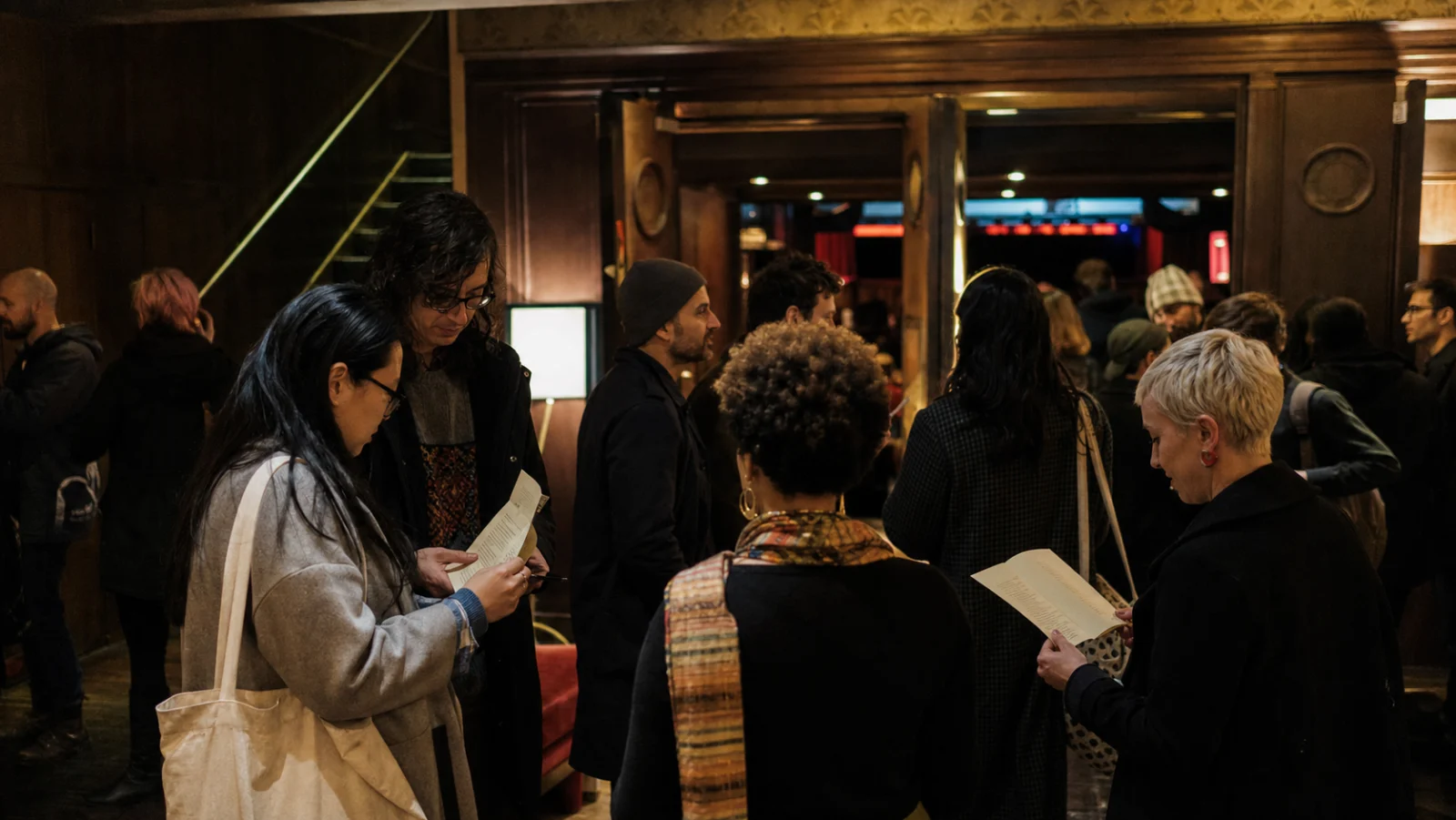
A film festival can be described in practical terms: a venue, a schedule, a set of rights agreements, a projector and an audience. That description is accurate, but it misses the reason people continue to build festivals when nearly every film can eventually be watched alone. A festival changes the social conditions of viewing. It asks strangers to give the same work their attention at the same moment, then makes room for the questions that attention produces. A humanist film festival adds a particular commitment to that temporary public. It treats curiosity as a civic virtue, disagreement as a practice that can be improved, and human consequences as more important than loyalty to a doctrine.
The Portland Humanist Film Festival belonged to a small-scale tradition: volunteer energy, independent theaters, ambitious ideas and programs assembled for audiences who might not already identify with a movement. Its archive matters because it records more than titles. It records an attempt to make reason, science, liberty, compassion and artistic experience meet in public. The details belong to their time, yet the underlying model remains useful.
A temporary public square
Most public discussion now arrives already sorted. Platforms select what appears, metrics reward speed and emotional certainty, and people enter conversations with little agreement about what they have actually seen. A screening creates a modest but meaningful alternative. For ninety minutes, the audience shares a sequence of images, statements, silences and narrative choices. Viewers may interpret those elements differently, but they begin the conversation with a common object in front of them.
That common object does not guarantee agreement. It does something better: it gives disagreement a shape. A person can point to a scene, an omission, a contradiction or a change in a character rather than arguing only from identity or abstraction. The film becomes a piece of public evidence. It can be questioned, defended, compared and reconsidered.
A festival intensifies this effect by placing works beside one another. A documentary about scientific reasoning may change how an audience receives a drama about belief. A film about civil liberties can make the ethical stakes of a later comedy more visible. Curation builds a temporary public square in which ideas continue across screenings.
Humanism becomes concrete through stories
Humanism is often summarized through nouns: reason, dignity, freedom, responsibility, compassion. These words are necessary, but they can remain safely abstract. Cinema gives them bodies, locations, pressures and consequences. Freedom appears as the decision someone is allowed to make. Dignity appears in the way a camera looks at a vulnerable person. Responsibility appears when a character can no longer pretend that an outcome belongs to someone else.
Stories also complicate moral confidence. A principle that looks simple in a statement may become difficult when a film reveals unequal power, incomplete information or conflicting obligations. This difficulty is not a failure of humanist ethics. It is where ethics begins. If moral judgment concerns the lives of real people, then context matters.
A festival can place that complexity inside a broader framework without dictating a single correct reaction. The program says that evidence matters, that people matter and that claims should remain open to examination. Individual films then test those commitments under different conditions.
Reason needs an emotional vocabulary
Reason is sometimes presented as the opposite of emotion, as though clear thinking requires a person to become less human. Film exposes the weakness of that opposition. Emotion directs attention. It tells viewers that something is at stake. The question is not whether an audience feels, but how those feelings are connected to evidence, perspective and consequence.
A manipulative film can use music, editing or selective testimony to manufacture confidence. A responsible film can use emotion to make neglected experience perceptible without pretending that feeling alone proves a claim. Learning to distinguish those approaches is a form of media literacy. Viewers can ask why a sequence moved them, what information accompanied that response and whether another perspective was excluded.
Humanist culture benefits from this emotional vocabulary. Facts can establish that a policy causes harm; stories can help an audience understand how that harm enters a household, a body or a future. Evidence and empathy are strongest when each corrects the weaknesses of the other.
The importance of mixed audiences
An event designed only for committed insiders may offer solidarity, but it rarely tests its language. A public-facing humanist festival has a different opportunity. It can welcome atheists, agnostics, religious viewers, scientists, artists, activists, students and people who simply liked the description of a film. The program becomes a meeting place rather than a membership test.
Mixed audiences improve discussion because familiar assumptions must be explained. Terms that feel obvious within one community become questions. A claim about secular ethics may encounter a viewer who associates morality with religious tradition. A critique of belief may meet someone whose faith is connected to family, migration or survival. These encounters can produce friction, but they can also replace caricature with specificity.
The goal is not politeness without substance. A humanist festival should remain willing to examine supernatural, political and cultural claims. The challenge is to criticize ideas without treating people as disposable examples of those ideas. A good festival models conviction without dehumanization.
Independent venues change the meaning of a film
Where a film is shown affects how it is understood. A neighborhood cinema carries memories of previous audiences, local debates and independent programming. Its scale makes participation visible. People recognize that they are watching with others rather than consuming an anonymous stream.
Independent venues also connect a festival to a place. Portland was not merely an address in the PHFF record. Local humanist organizations, volunteers, theaters, radio programs and audiences gave the event its character. A program about universal questions became concrete through regional institutions and relationships.
This local grounding matters in an era of global platforms. A festival can present films from many countries while remaining accountable to the community in the room. It can invite a local scholar, advocate or filmmaker to respond. It can connect a global human-rights issue to organizations already doing relevant work nearby. The venue becomes a bridge between representation and action.
Festivals teach attention through rhythm
Watching several films across a weekend is not simply watching more. The rhythm of a festival changes attention. There is anticipation before a screening, concentration during it, conversation afterward and a pause before the next work. Those intervals allow ideas to settle and collide.
Programming rhythm can also prevent intellectual exhaustion. A demanding documentary may need to be followed by a shorter, more playful work. A program centered on injustice may require a film that restores a sense of agency. Comedy can challenge dogma without turning the entire weekend into a seminar. Animation can make mathematical or philosophical questions approachable to viewers who would avoid a formal lecture.
The human body is part of curation. Audiences need food, movement, clear schedules and moments when they are not being asked to absorb another urgent claim. Respecting those limits is not a retreat from seriousness. It is how a festival creates the conditions for sustained thought.
The conversation after the credits
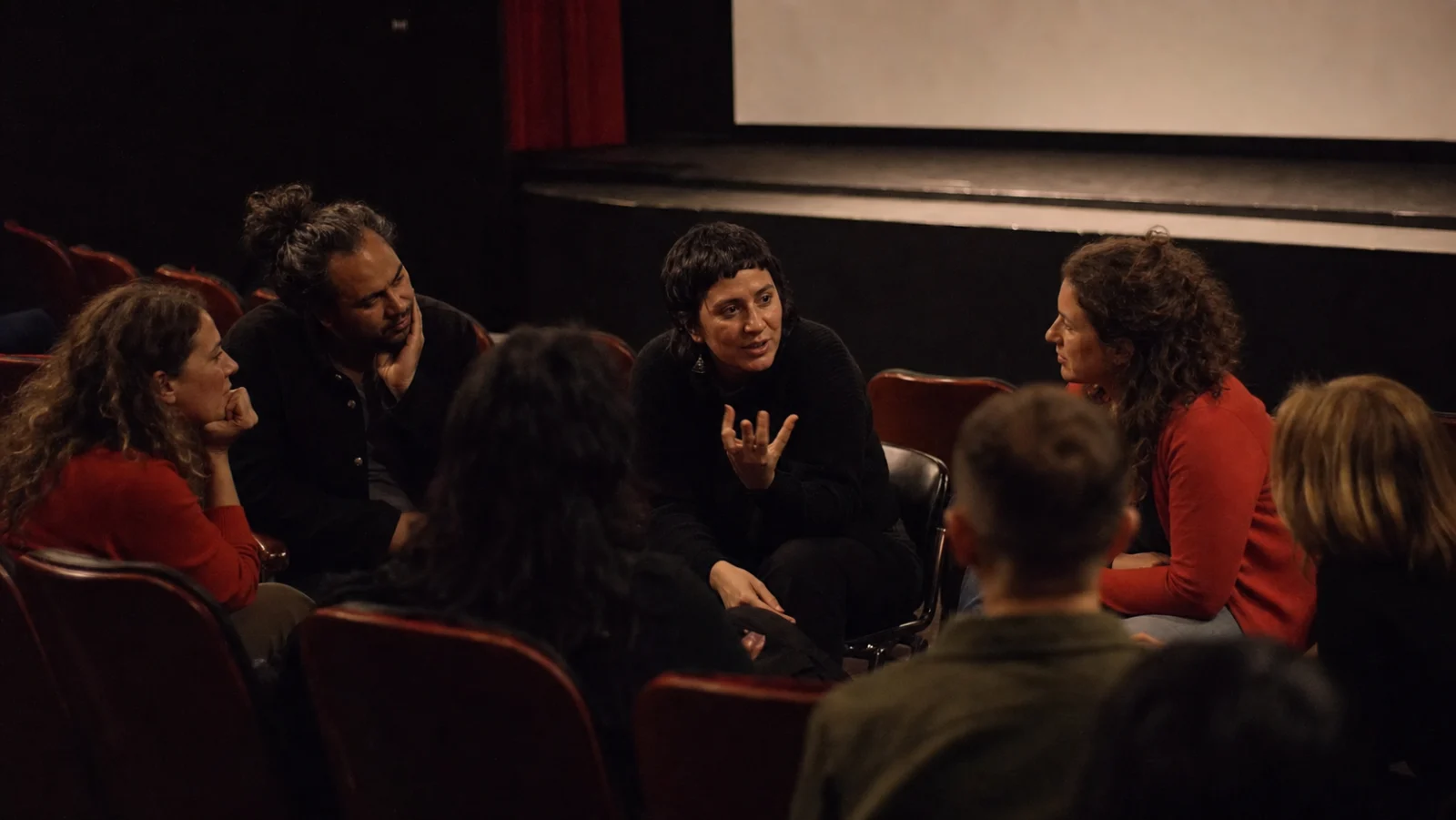
The lights come up, and the social risk of the event begins. During the film, viewers could remain private. Discussion asks them to place an interpretation among other interpretations. A thoughtful post-screening conversation can make uncertainty acceptable. Someone may say that a scene changed their mind, that a claim seemed unsupported or that they do not yet know what to conclude.
These moments require design. A moderator can begin with observation before evaluation: What did the film show? Which voice carried authority? Where did the story change direction? Starting with the work reduces the pressure to perform a complete worldview immediately.
Moderation should also protect difference without pretending every claim is equally supported. Participants deserve respect; ideas remain open to challenge. Evidence can be requested. Harmful generalizations can be interrupted. Quieter voices can be invited without being forced to represent a group. The conversation becomes an extension of humanist method.
Small festivals preserve cultural experiments
Large festivals leave catalogs, reviews and institutional records. Small volunteer events are easier to lose. Their websites expire, image links break, organizations change and schedules disappear into unindexed files. Yet these events often document important cultural experiments: communities testing new ways to discuss science, rights, belief and art.
Preserving a festival archive allows later readers to see what questions felt urgent, which films circulated together and how organizations described their purpose. It also reveals limitations. A program may show gaps in representation, language that has aged or ambitions that exceeded available resources. An honest archive keeps those tensions visible.
The purpose of preservation is not to pretend an event is still active. Dates, prices and calls for submissions must be clearly historical. The goal is continuity of memory: authentic routes, verified context and enough interpretation for a visitor to understand what the materials once did.
Why the model remains relevant
Humanist film festivals matter because the problems they address have not vanished. Public life still struggles with misinformation, moral certainty, unequal power and the temptation to reduce opponents to symbols. Scientific knowledge still needs forms that can reach beyond specialist communities. Human rights still need both rigorous documentation and stories that resist abstraction.
At the same time, the conditions of attention have become more difficult. People carry an endless stream of competing images. A festival cannot solve that problem at scale, but it can create a temporary exception: a room where attention is shared, claims can be examined and conversation has a beginning and an end.
The modest scale is part of its value. A volunteer can welcome a first-time visitor. A moderator can notice when a discussion turns cruel. An audience member can encounter a film they would never have selected from a personalized menu. Humanism becomes not only a position but a set of practices: look carefully, ask better questions, remain open to revision and remember the people affected by every conclusion.
Building the next public room
Reviving the idea of a humanist film festival does not require copying an earlier event. The format can change. A program might combine a restored classic, a new documentary, a short film and a local conversation. It might take place in a cinema, library, university or community hall. What matters is the quality of the invitation.
That invitation should be intellectually honest about what is known, accessible to people outside an established circle and clear about the difference between critique and contempt. It should treat filmmakers and participants as partners rather than raw material. It should preserve enough of its own record that future viewers can understand what happened.
The screen is only the center of the room for a while. The larger purpose is what happens around it: strangers sharing attention, arguments becoming more precise, empathy acquiring evidence and a community practicing how to think together. That is why the festival form continues to matter.