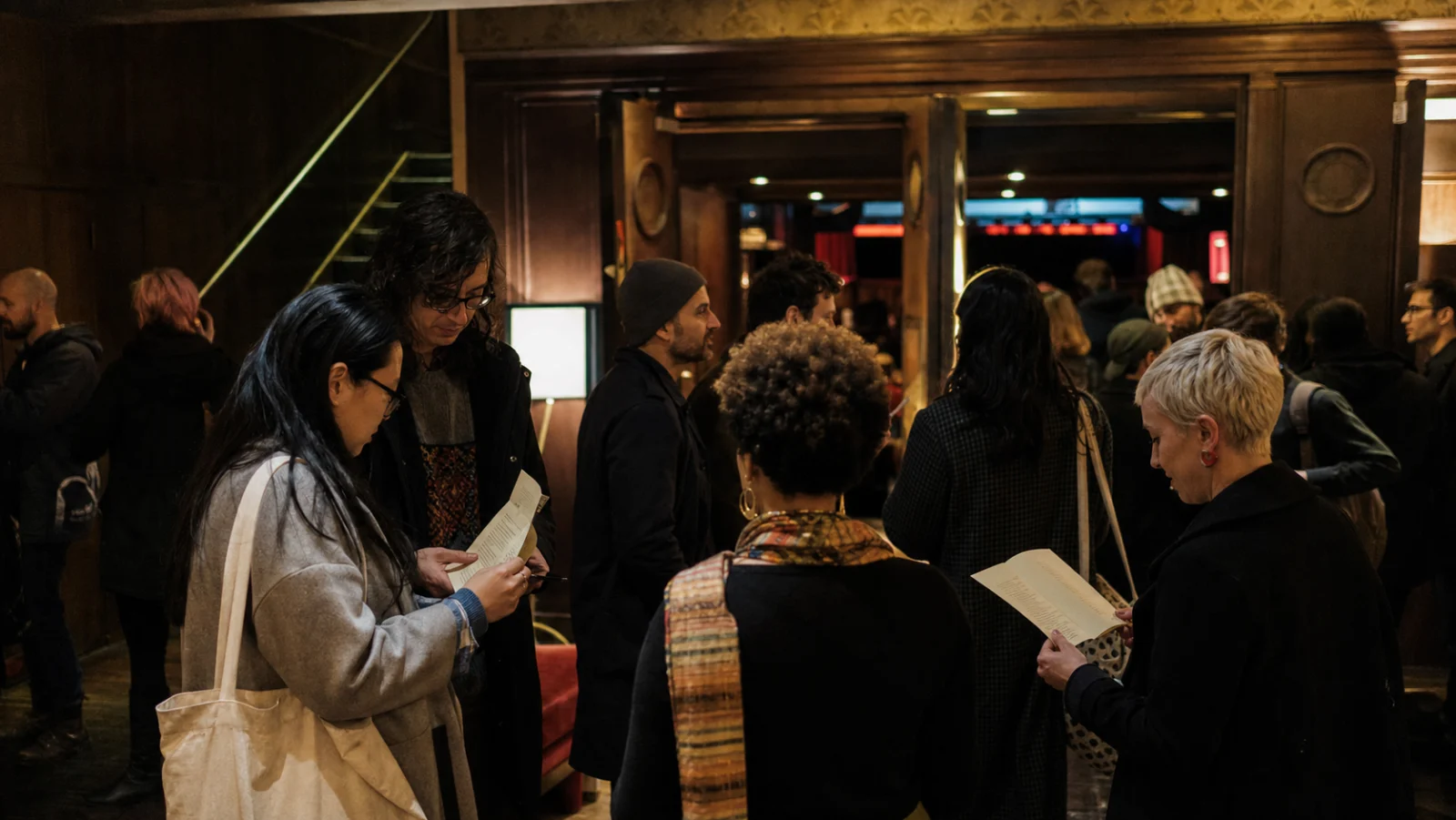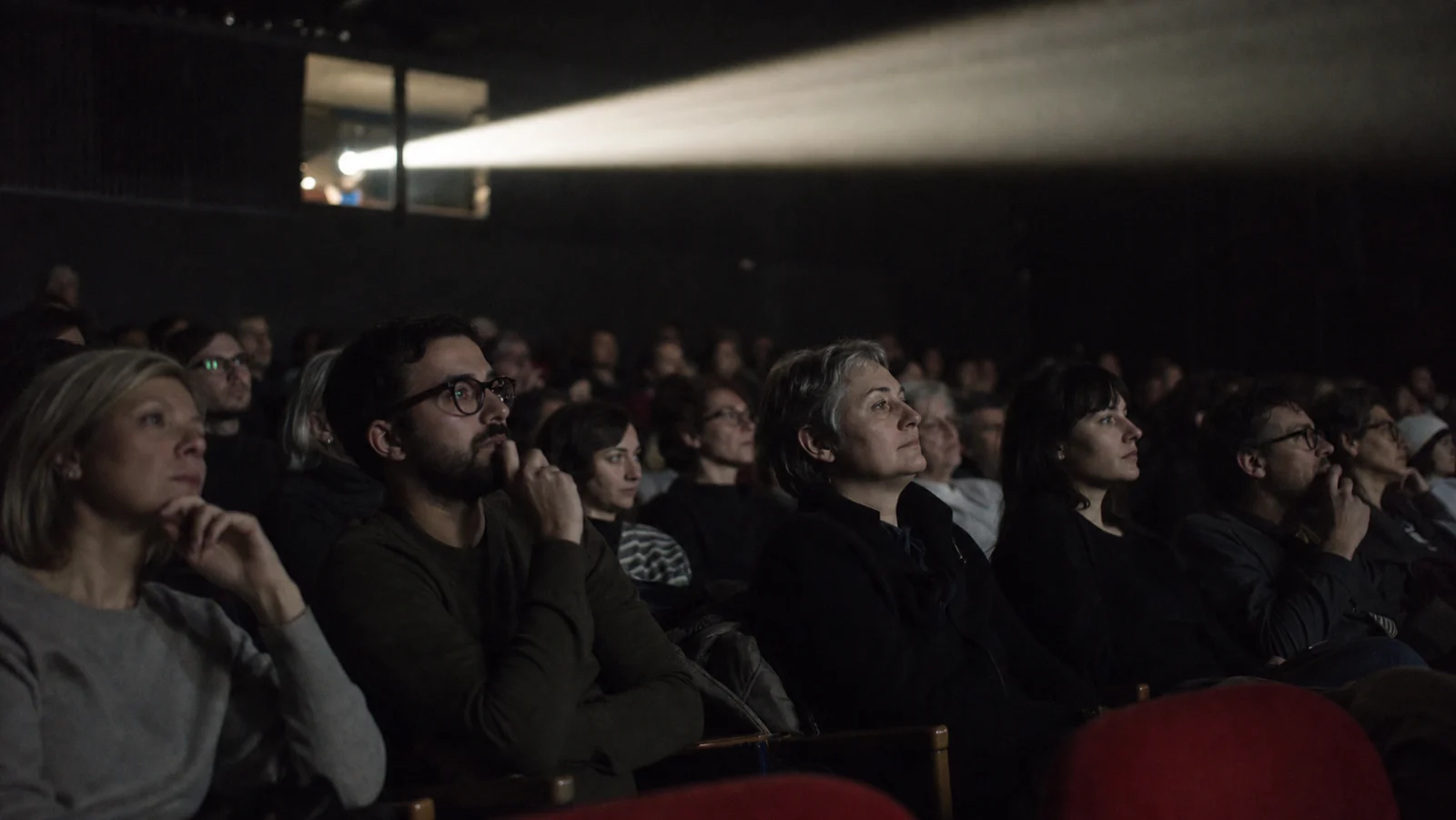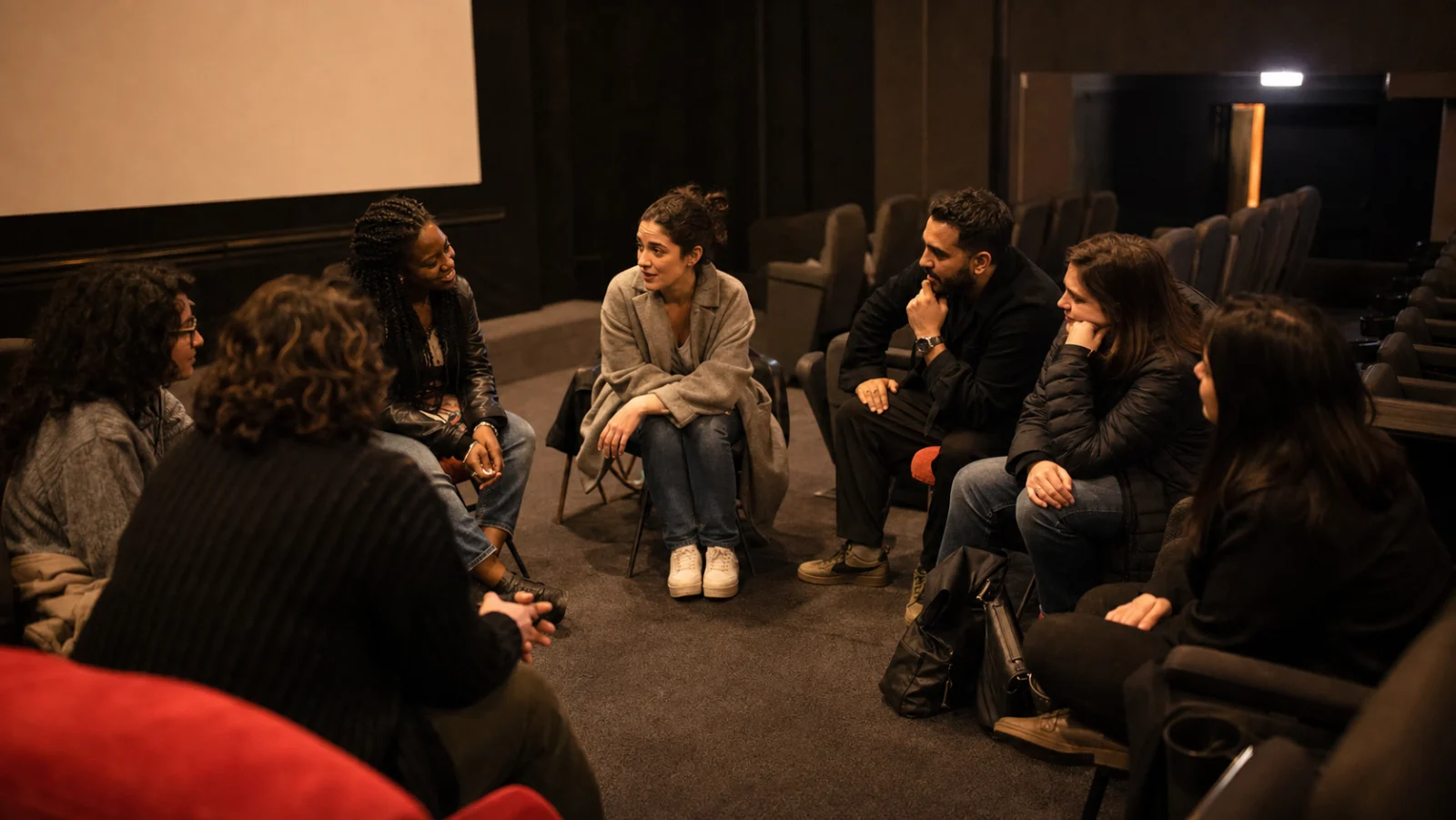
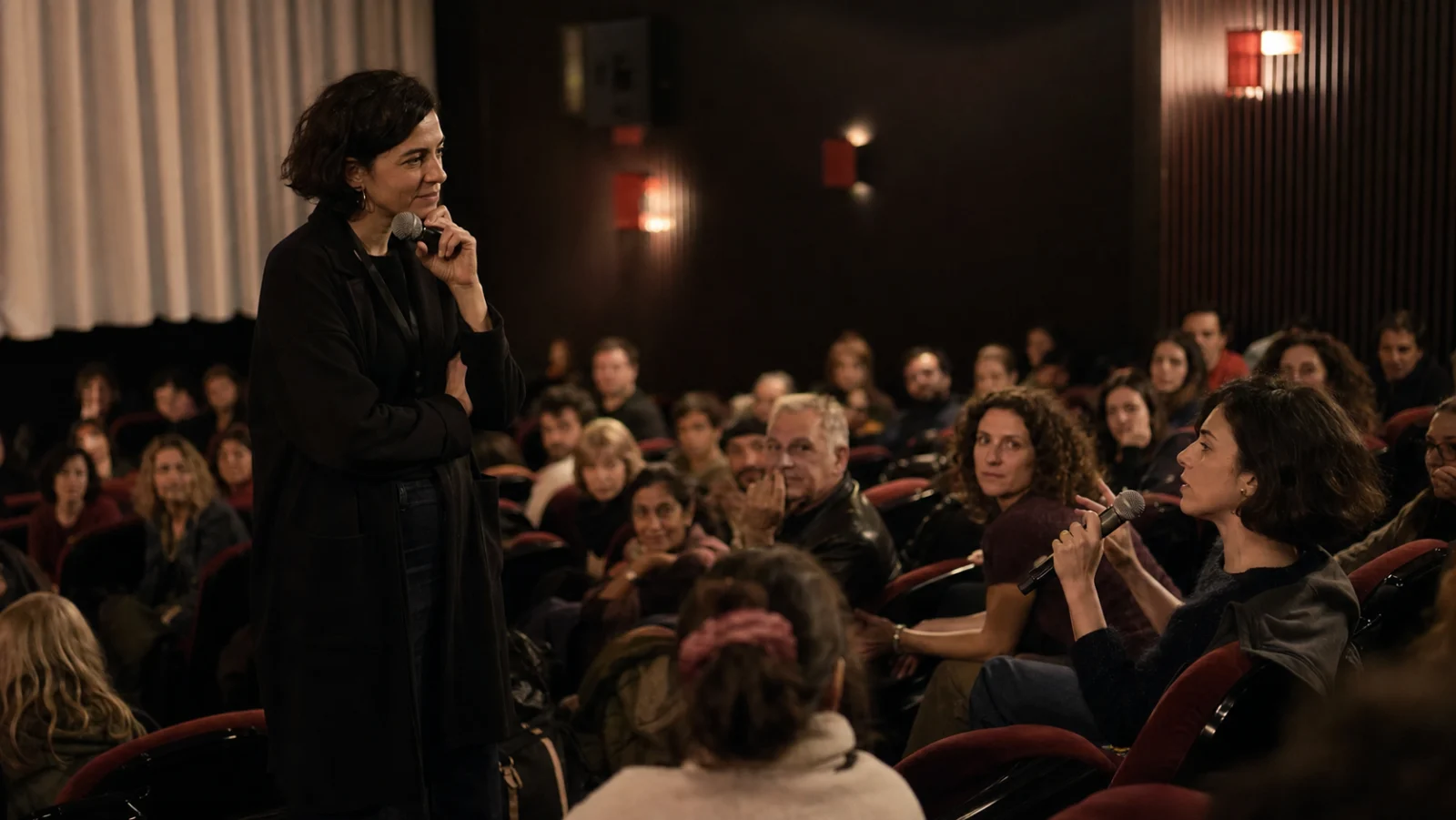
The lights come up, the credits end and a room full of people suddenly becomes aware of itself. During the film, each viewer could remain private. A post-screening conversation asks them to risk an interpretation in public. This transition can produce extraordinary exchanges, but it can also produce a lecture, a debate dominated by two people or a sequence of statements unrelated to the work.
Good dialogue is designed. The design does not control conclusions. It creates conditions in which attention can move from reaction to observation, from observation to interpretation and from interpretation to a more informed disagreement. A humanist film event should treat this conversation as part of the program, not as an improvised extra.
Decide what the conversation is for
Different screenings need different forms. A filmmaker question-and-answer session may focus on craft and production choices. A science documentary may need an expert to clarify evidence. A human-rights film may require a trauma-informed facilitator and clear boundaries. A classic drama may benefit most from open interpretation.
The purpose should be visible before the discussion begins. Audiences need to know whether they are invited to ask questions, share responses, examine claims or connect the film to local action.
Trying to do everything in twenty minutes creates frustration. A focused conversation can end with important questions still open. Success is not completeness; it is movement toward greater clarity.
Begin with a moment of silence
Immediate applause or the first raised hand can determine the emotional direction of the room before quieter viewers have processed what they saw. A brief pause respects the work and the audience.
The moderator can invite one breath, then offer a simple transition: “Let us begin with what is still present for you.” This prevents the discussion from feeling like an examination.
Silence is especially important after films involving violence, grief or testimony. It gives participants space to decide whether they want to speak rather than treating visible emotion as material for the event.
Start with observation before judgment
The opening question should return attention to the film. “What moment changed the direction of the story?” or “Which image has stayed with you?” is often more productive than “Did you like it?”
Observation creates common ground. Participants can point to an edit, line, silence or contradiction. Interpretations will emerge, but they remain connected to evidence.
This sequence is a critical-thinking practice. It separates what appeared on screen from the conclusions viewers brought to it. The distinction makes disagreement less personal and more precise.
Make the social rules brief and real
Long lists of discussion rules can sound ceremonial. A few clear expectations are better: speak from your own perspective, criticize ideas without attacking people, make room for others and distinguish verified facts from interpretation.
Rules matter only if the moderator uses them. If one person repeatedly interrupts, a general reminder is insufficient. The facilitator must intervene politely and directly. If a statement targets a group with contempt, “all views are welcome” cannot become an excuse for abandoning participants.
Safety does not mean freedom from disagreement. It means that disagreement has a form compatible with continued participation.
Ask questions that open rather than display expertise
A moderator may know the film deeply, but questions should not become disguised lectures. An overloaded question signals the preferred answer and leaves the audience to confirm it.
Open questions are specific without being leading. “How did the film establish the speaker’s authority?” invites analysis. “Why was the film’s obvious critique of institutional hypocrisy so effective?” supplies the conclusion.
Follow-up questions can increase depth: What in the film supports that reading? Did anyone understand the scene differently? What would we need to know to decide between those interpretations?
Manage airtime as a shared resource
Public conversations reproduce social inequalities unless someone notices. People accustomed to institutional speech may answer quickly and at length. Others need time to formulate a thought or may reasonably hesitate in a room where they are underrepresented.
Moderators can state that they will prioritize new voices after repeat speakers. They can ask for concise contributions and summarize long comments before moving on. A show of hands can reveal how many people want to speak and help allocate time fairly.
Inviting quieter voices should not become pressure. No person owes the room an account of their identity or trauma. Participation includes the right to listen.
Distinguish questions from speeches
At filmmaker events, audience members sometimes use the microphone to deliver an argument followed by “What do you think?” The result consumes time and shifts attention away from the guest or group.
A moderator can ask participants to offer one question or concise comment. If a contribution expands, interruption can be respectful: “I want to make sure we reach the question and leave room for an answer.”
This is not hostility toward passion. It protects the collective purpose. The microphone belongs temporarily to each speaker but ultimately to the room.
Use expertise without creating a new authority problem
Experts can correct misinformation, explain context and connect a film to current research. They can also dominate the event, turning audience inquiry into a second screening-length lecture.
Brief framing remarks work better than a complete presentation. The moderator can invite the expert to respond after several audience observations, preserving the distinction between interpretation and factual clarification.
Experts should name the limits of their field. A scientist can explain evidence without claiming to settle policy values. A lawyer can describe legal standards without representing every affected community.
Facilitate disagreement at the level of reasons
When participants disagree, the moderator should resist the urge to erase the difference with “both sides have good points.” The disagreement may reveal a real conflict about evidence or values.
The useful move is clarification. Are participants interpreting the same scene differently? Do they disagree about a fact outside the film? Are they prioritizing different ethical principles? Naming the level of conflict helps the group continue.
Participants can be asked what evidence would change their view. If the answer is nothing, the room has learned that the claim is functioning as an identity commitment rather than an open conclusion.
Respond to misinformation proportionately
Not every inaccurate statement requires a public correction, but errors central to the discussion should not remain unaddressed. The moderator can separate the person from the claim: “I want to check that factual point before we build on it.”
If reliable information is available, it can be offered briefly. If not, uncertainty should be preserved. Promising to include a verified source in follow-up materials is better than improvising authority.
The tone matters. Humiliation makes correction a social threat. Precision makes it part of the method.
Protect testimony from extraction
A film may prompt someone to share a personal experience. The room should receive that contribution without demanding additional detail, debating its emotional legitimacy or turning the speaker into an instant representative.
The moderator can thank the person, reflect the relevance and allow them to define the boundary. If the disclosure indicates immediate risk, the event should have a quiet support pathway rather than attempting care publicly.
Stories are not raw material for making the discussion feel meaningful. Humanist facilitation keeps the person more important than the program.
Connect the film to place
Discussion becomes more useful when global or abstract questions meet local knowledge. A Portland screening about civil liberties might include a local legal organization. A science film might connect with a university lab or community educator. A film about housing can be discussed with people working inside local systems.
The connection should not reduce the film to an action campaign. Art can remain ambiguous. Local context gives audiences a way to test whether the film’s framing travels and where conditions differ.
Place also makes responsibility concrete. Viewers can see institutions and relationships within reach rather than locating every problem elsewhere.
Design a strong ending
Discussions often end because the venue needs the room, not because the conversation has reached a natural point. A two-minute closing structure helps.
The moderator can summarize two or three questions that became clearer, name an unresolved tension and point to verified resources. Participants might be invited to hold one question rather than deliver final speeches.
An ending should not manufacture consensus. It should accurately represent the work the room did and create a dignified transition back to ordinary time.
Learn from the room
Facilitation improves through reflection. After the event, organizers can note who spoke, where energy changed, which question opened the film and which intervention arrived too late. Anonymous audience feedback may reveal barriers invisible from the stage.
Patterns across screenings matter. If the same participants dominate, structure needs adjustment. If questions repeatedly become factual disputes, better context may be needed before discussion. If audiences leave quickly, the schedule may be exhausting rather than the community uninterested.
Evaluation should include accessibility: microphone quality, captions, physical access, language and whether the format worked for people who process conversation differently.
Conversation as a humanist practice
The purpose of dialogue is not to prove that everyone in the room is reasonable. It is to practice conditions under which reasoning and care can coexist. Participants bring unequal knowledge, strong emotions and real histories. The moderator’s task is to make those realities compatible with shared inquiry.
A film gives the room a common object. Facilitation keeps the object available when discussion drifts toward performance or hostility. Evidence can be requested, uncertainty protected and harm interrupted without pretending that the process is neutral.
When this works, the event produces something no solitary viewing can provide. An interpretation meets another mind. A confident judgment becomes a question. A person discovers that changing a view can happen in public without defeat. The conversation after the credits becomes not commentary on the festival, but one of the festival’s most important films—made live by the audience itself.